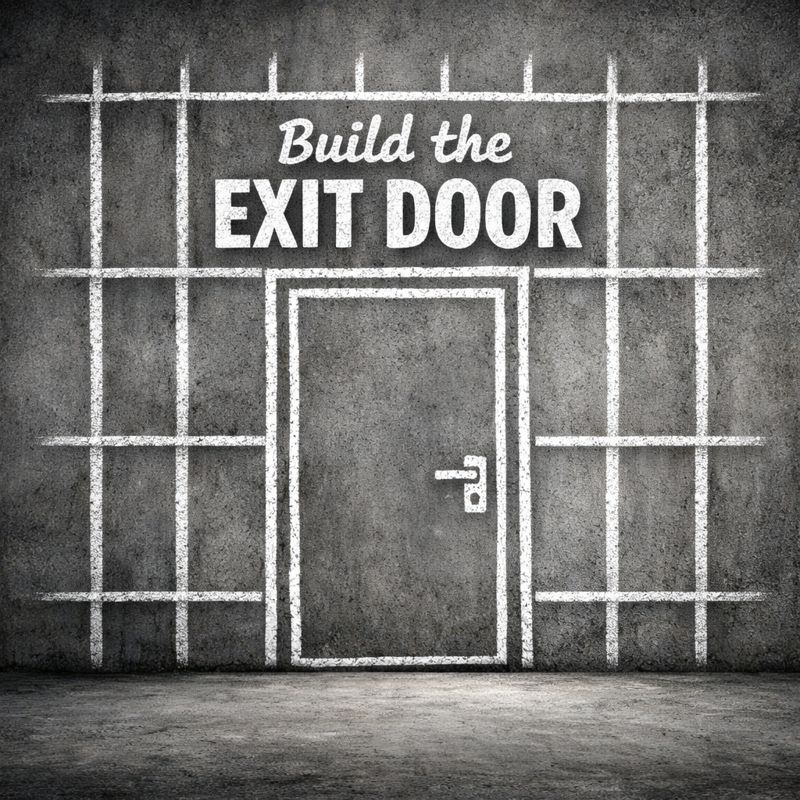
Most people grind harder to afford the cage instead of building the exit door.
Corporate life can be a blessing.
It can also become a trap—quietly, slowly, and very expensively.
This post isn’t anti-corporate.
It’s pro-options.
Because the real problem isn’t your job.
The “cage” is what happens when your lifestyle grows faster than your freedom.
Why Corporate Life Feels Safe (Until It Doesn’t)
A stable paycheck can make you feel protected.
And in many ways, it is.
But stability becomes dangerous when it creates dependency.
Most people don’t get trapped by one big mistake.
They get trapped by small upgrades:
- A slightly higher rent because “I deserve it.”
- A car payment that matches the image, not the income.
- Subscriptions and convenience spending.
- A title that becomes your identity.
- Benefits that feel impossible to replace.
- Comfort that slowly reduces your hunger to grow.
That’s how people end up grinding harder.
Not for freedom.
For maintenance.
The Corporate Cage Isn’t the Job — It’s the Cost of Leaving
The cage is usually built from five things.
Lifestyle Inflation
When income rises, spending rises with it.
Your “standard” becomes your new minimum.
Identity Attachment
You stop being “Timothy who does fitness.”
You become “Timothy, Personal Trainer at X hotel.”
The role starts to define your worth.
Golden Handcuffs
Bonuses, allowances, insurance, perks.
Great benefits.
But they can make you afraid to move.
Skill Stagnation
You get good at your job.
But not necessarily valuable in the market.
Comfort can quietly kill growth.
Fear of Starting Over
The longer you stay without a plan, the scarier leaving becomes.
The Exit Door Framework (Simple, Practical, Powerful)
You don’t need to quit your job.
You need an exit plan with dates.
This framework works whether you want to:
- Start a business
- Pivot careers
- Build a side income
- Go freelance/consulting
- Create options without panic
Step 1: Build the Door — A 12-Month Exit Map
Start with clarity.
Ask yourself:
- Where do I want to be in 12 months?
- What does freedom look like for me? (income, time, location, stress)
- What’s the deadline? Pick a month, not “someday.”
Example:
“In 12 months, I want my side business to consistently generate $1,500/month.”
Step 2: Buy Time — Create Financial Runway
Runway is what turns fear into confidence.
A smart target:
- Save 3–6 months of living expenses
- If you’re starting from zero, aim for 1 month first
Make it automatic:
- Set a weekly transfer to a separate savings account
- Build the habit before you build the amount
Rule: Your exit plan is only as strong as your runway.
Step 3: Upgrade Skills Like You Upgrade Your Lifestyle
Most people invest in image.
Few invest in skills that create independence.
Pick:
- One high-income skill that travels
(sales, content creation, coaching, analytics, design, operations, writing) - One proof asset that shows results
(portfolio, case studies, before/after, testimonials)
In corporate life, your resume helps.
In the real world, proof wins.
Step 4: Build Income Streams Before You Need Them
Don’t wait for burnout to start planning.
Choose one lane and commit for 90 days:
- One offer
- One audience
- Consistent delivery
Start unsexy:
- A simple service
- A clear transformation
- A small price point
- Repeatable results
90-day focus beats 12-month confusion.
Step 5: Protect the Machine — Your Body Is Part of the Exit Plan
This is the part most people ignore.
Burnout makes people quit badly.
Not exit wisely.
If you want an exit plan, you need execution power:
- Sleep
- Training
- Recovery
- Stress management
Your body isn’t a side project.
It’s the vehicle that carries the plan.
Signs You Might Be Building a Cage
Be honest with yourself.
Here are common signs:
- Your lifestyle requires your current paycheck
- You feel anxious imagining leaving your role
- You haven’t learned a new skill in the last 6 months
- You rely on motivation instead of systems
- You don’t have 1 month of expenses saved
- You keep saying “I’ll start later”
If any of these hit home, it’s not a failure.
It’s awareness.
And awareness is where freedom begins.
A Simple Weekly Routine to Start Building the Exit Door
If you want action without overwhelm, do this every week:
- 30 minutes: audit spending (what’s making the cage expensive?)
- 60 minutes: build one skill (learn, practice, publish)
- 60 minutes: build one asset (post, portfolio, case study, offer)
- 2 workouts: protect your energy and mental sharpness
- 1 automatic transfer: add to your runway
Simple.
Repeatable.
Effective.
Final Thought
Corporate life can fund your growth.
Or fund your cage.
The difference is whether you’re building options.
Freedom isn’t quitting.
Freedom is having the ability to leave without panic.
Question for you:
What’s the one thing currently making your cage more expensive—and what’s your first move to build the door?